


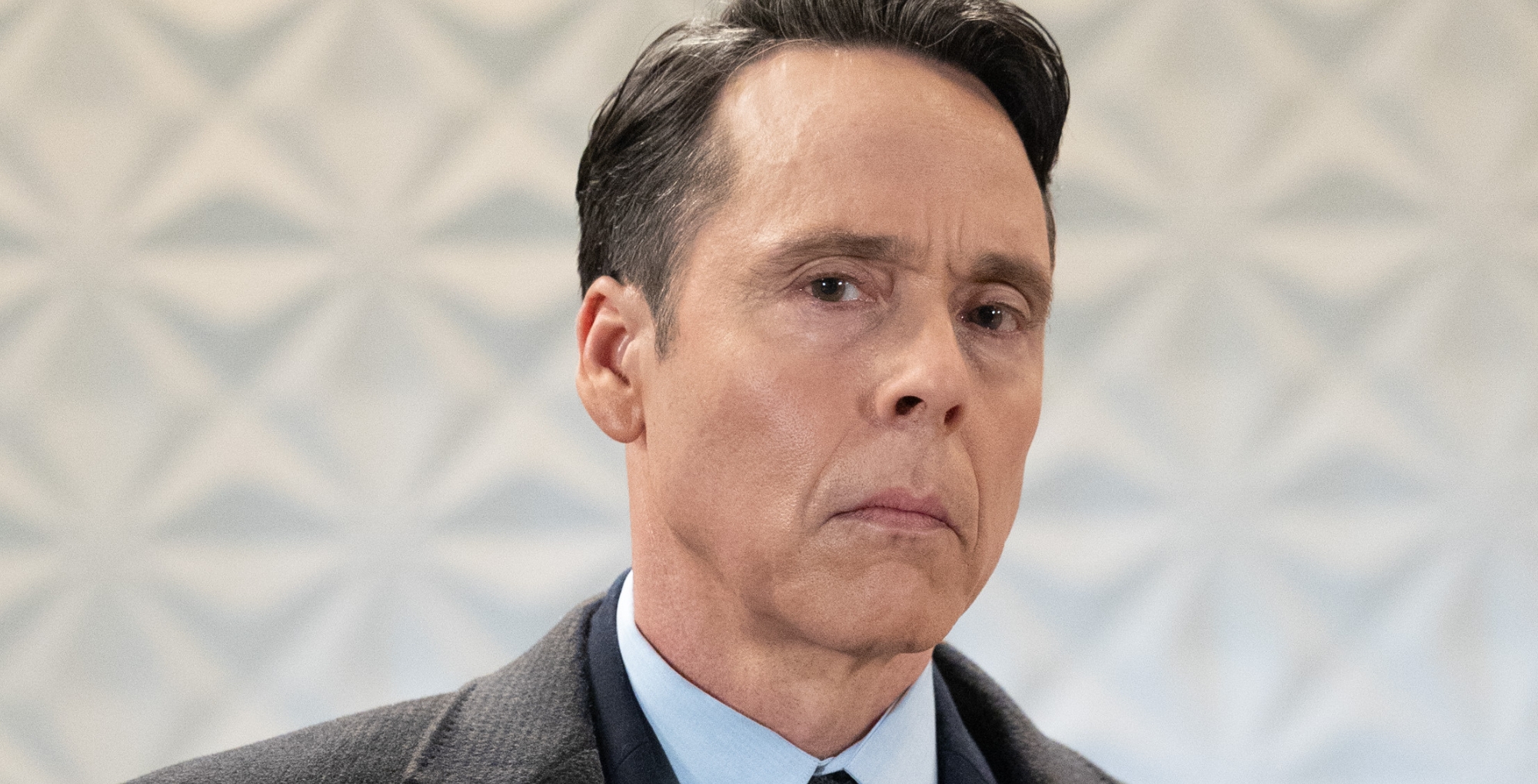
On General Hospital, Ross Cullum arrived in Port Charles like someone who already owned the place. He didn’t need a big entrance or a speech. He just stepped into other people’s scenes and changed the temperature, leaning first on Jack, then on Britt, and making it clear that Rocco was not off limits if that was the easiest way to get her compliance. The scary part wasn’t that he looked ruthless. It was that he looked organized, as if this were all part of his normal workday. Andrew Hawkes revealed that while Cullum isn’t a mustache-twirling villain, he’s a guy who thinks he’s the only adult left in the room.
Key Takeaways
- Cullum entered Port Charles with authority and immediately applied pressure to multiple characters, including Britt and Jack.
- Andrew Hawkes said Cullum does not view himself as a villain and believes his actions are justified.
- Hawkes described building a personal backstory to avoid playing the role as one-note.
- Cullum’s control comes from efficiency and restraint rather than overt emotion.
Not a One-Note Villain
Hawkes discussed his new role on the That’s Awesome! podcast with Steve Burton (Jason) and Bradford Anderson (Spinelli). He sounded like someone still getting used to the soap pace while also being mildly amused that his personal nightmare had become a job he now had to show up for every day. He talked about the pace, the page count, and how you can feel ready and still have your mind go blank the moment they start moving you around. “It’s a new world for me completely,” he remarked.
On playing Cullum, Hawkes said he needed something personal to hang it on. “To me, he has good reasons for everything,” he noted, further explaining that, “To me, he’s the hero… Well, good villains have to think that, right?”
He also made it clear he wasn’t interested in playing a cardboard monster who enjoys hurting people for sport. “From my standpoint he’s extremely caring and feels like he’s been wronged in a huge way,” he said, which doesn’t excuse anything Cullum does, but it does explain why he walks into a room like he expects to be obeyed.
The Professional Mask
A lot of Hawkes’ take on Cullum came down to control, and not the melodramatic kind. This was about being efficient, speaking only when necessary, and holding the line so the character never looks like he’s scrambling. Hawkes talked about how that changes the acting job, because you’re not playing broad emotion, you’re playing restraint, and you have to find the flicker inside it.
He filled in his own blanks the way working actors do when the scripts give you the moves but not always the inner life, pulling from his real life and building something private that could still show up on camera if the moment allowed it. “I’m a father, so I made it involve his child,” he said, describing a personal wound that could explain why Cullum might see himself as justified even while he’s doing things that read as brutal.
And that’s the part that makes Cullum feel dangerous already. He doesn’t behave like someone aware he’s crossed a line. He behaves like someone who thinks the line moved on him first. (Find out how Cullum revealed the inner workings of the WSB.)


