


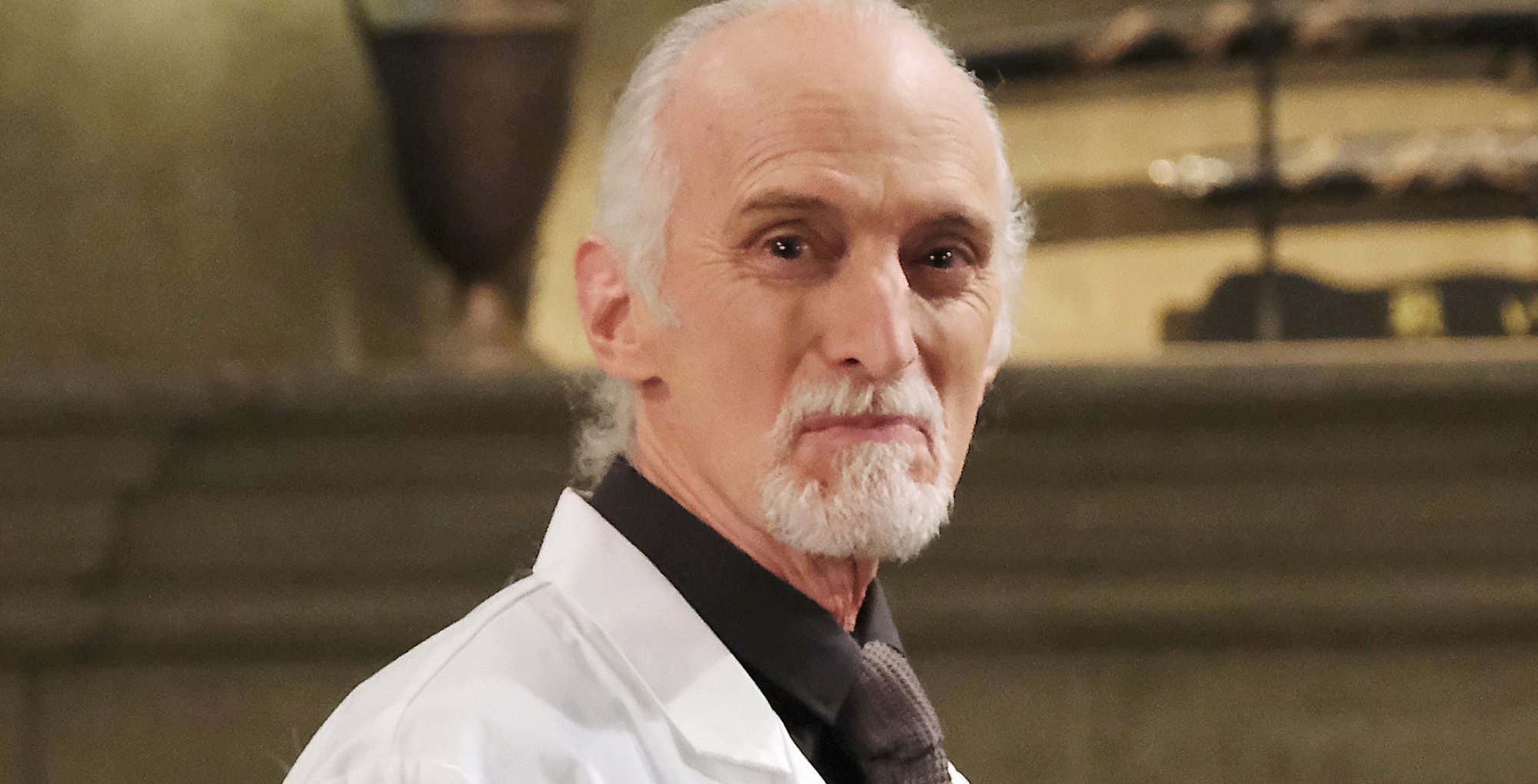
On Days of our Lives, Dr. Rolf had already crossed the line before anyone in Salem bothered to pretend there was still one. He’d brought lab rats back to life and said it like a man announcing the pot had boiled, and the show didn’t overemphasize the breakthrough. By the time Gwen repeated the words “human testing,” it stopped sounding like a threat you file away for later and became the next appointment on the calendar. That’s where this gets nasty for EJ, for Gwen, and for anyone who wanders too close, thinking it’s only another DiMera money scheme.
Key Takeaways
- Dr. Rolf is moving from resurrecting rats to human testing, shifting the story from theory to immediate danger.
- EJ reacted to the loss of control over timing and leverage rather than the ethics of the experiment.
- Gwen pushed forward while simultaneously preparing for the moment she stops being indispensable.
- Once resurrection becomes possible, it will turn into a commodity that won’t stay contained in Salem.
Dr. Rolf Turns “Someday” Into “Next”
Dr. Rolf (Richard Wharton) gets his win, and it’s the most unsettling kind because it comes with proof, not swagger, as he moves from rats to people the way other men move from drafts to final copy. Gwen (Emily O’Brien) was stunned and asked for clarity. Rolf gave it to her, and the tone changed immediately. What had been vague and theoretical was suddenly something active and in motion, whether Salem was ready or not.
What bothered EJ (Dan Feuerriegel) isn’t the science so much as the surprise. He skips past the moral questions and fixates on the timing, because Gwen advanced the plan without clearing it first. That kind of independence is always going to irritate him more than whatever Rolf is actually building. He wants command of the sequence, the money, the leverage, and the escape hatch, because in Salem nothing stays buried and every move leaves a trail.
Gwen, meanwhile, kept talking like someone who knew her value had an expiration date. She kept insisting she’s essential, even while quietly accounting for the chance that she won’t be. That split runs through everything she says. When she asked Rolf if she could be revived if EJ killed her didn’t play as gallows humor, but preparation. (Find out how Wharton didn’t realize he was replacing a legend.)
EJ and Gwen Start Treating Resurrection Like Inventory
Once human testing is on the table, the project stops being a secret lab hobby and starts becoming a weapon people will fight over, steal, and deny owning. Rolf isn’t loyal to EJ, Gwen, or any promise whispered in a hallway; he’s loyal to results, and results have a way of walking out the door on their own.
EJ sees the uses immediately, not just in bringing someone back, but in controlling the story of who “came back,” when they did, and what that return buys him in courtrooms, bedrooms, and boardrooms. If a death can be reversed or convincingly faked, then so can consequences, and EJ has never been sentimental about consequences.
Gwen thinks speed keeps her safe because the faster it becomes profitable, the harder it is to discard her. But Salem is full of people who learned the hard way that being useful is not the same as being untouchable. And with Stefano’s bones now identified in the crypt, the question stops being whether Dr. Rolf can bring him back and shifts to whether this entire project was always circling that outcome.


